
San Diego · Temporary Power Services
Portable AC Rental
Spot coolers from 1 to 5 tons, plus temporary heating, delivered, vented and set up for the space they have to hold.
Portable AC Rental · San Diego
Cooling And Heating A Building That Has Neither
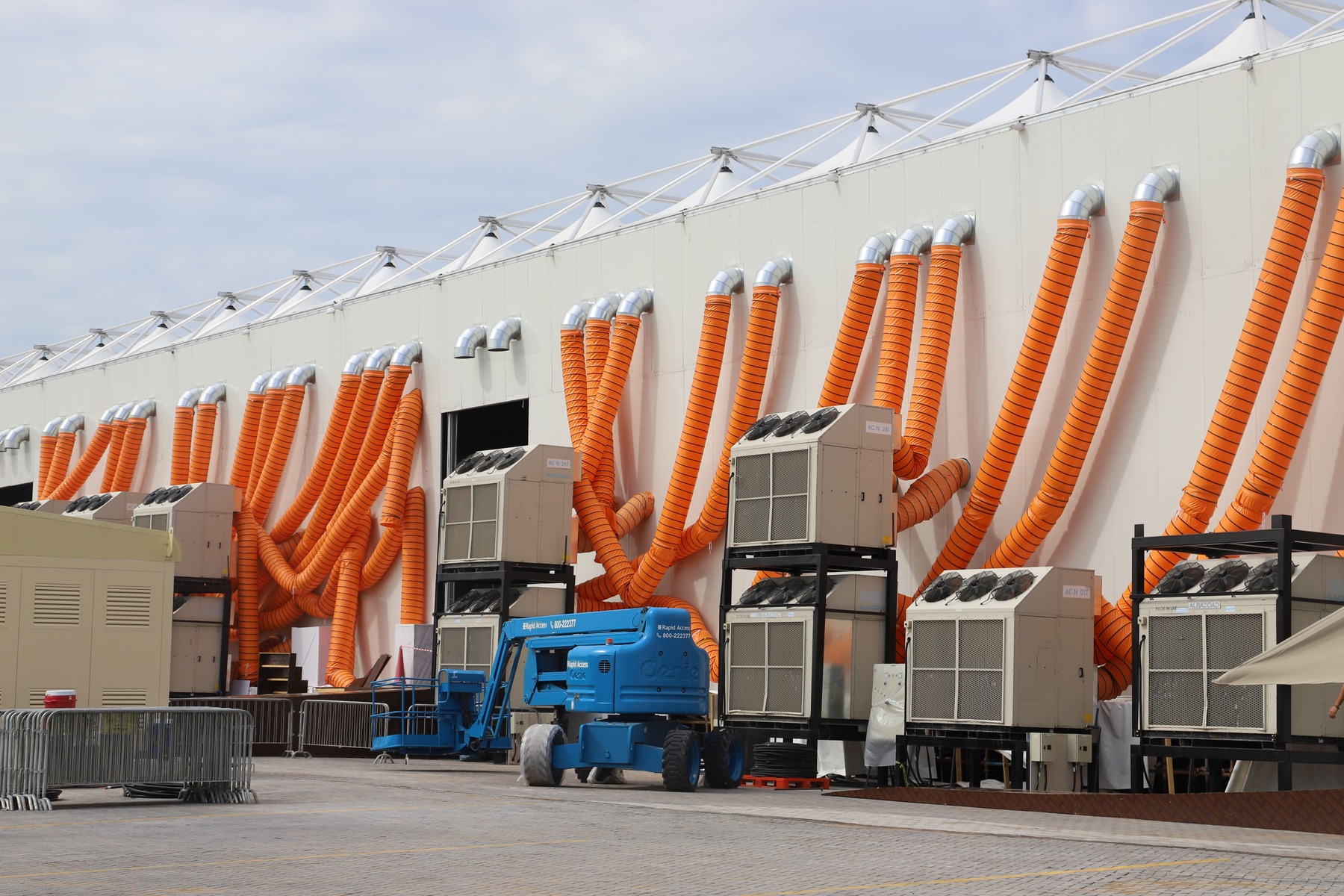
Portable AC rental covers the stretch of a project where the building is sealed and glazed but the permanent HVAC is not commissioned — which in San Diego is exactly when the inside of a structure becomes the hottest place on the site. We rent spot coolers from one to five tons, larger portable air conditioning for whole floor plates, and temporary heaters for winter slab cures and drying. The reason it matters beyond comfort is that materials have windows: drywall mud, paint, epoxy floors, resilient flooring adhesive and concrete curing all have temperature and humidity ranges, and blowing those ranges means doing the work twice. Sizing is straightforward if you do it properly and a guess if you do not, so we size by the space, the heat load and the glazing rather than by the room’s square footage alone. These units pull real current, so we check they can actually be fed from your temporary service before they arrive.
Why Go With Us For Temporary HVAC
Two things get portable cooling wrong on a job site. The first is undersizing, usually because somebody used a residential BTU-per-square-foot chart on a space with a glazed south elevation and no insulation yet. The second is venting: a portable AC moves heat, it does not destroy it, so hot exhaust ducted into the next room or into a ceiling void simply makes the problem somewhere else. We size against the real heat load and we duct the exhaust somewhere it actually leaves the building. And because we handle the power side too, from San Diego temporary power to the site lighting, we know whether your service can carry the units before they turn up.
- Sized against the actual heat load — glazing, occupancy, equipment, insulation — not a square-footage rule of thumb.
- Exhaust ducted properly to outside, so the heat leaves the building instead of moving next door.
- 1, 2, 3 and 5 ton spot coolers plus larger units for whole floor plates.
- Electrical load checked against your temporary service before delivery, because a 5 ton unit is a serious load.
- Temporary heating on the same rental for slab cures, drying and winter finish work.
- Delivered, positioned, ducted and started rather than left in the car park in a crate.
Reasons To Rent Portable Cooling Or Heating
Temporary HVAC goes on a site for reasons that usually come down to schedule and material specification:
The building is sealed but the HVAC is not commissioned
This is the classic gap. Glazing is in, the envelope is closed, and the permanent system is weeks from being started. Inside that building in an inland August it is genuinely dangerous, not merely unpleasant.
Finish materials have a temperature window
Drywall compound, paint, epoxy floors and flooring adhesives all specify a temperature and humidity range. Working outside it produces failures that surface weeks later, and the remedy is doing it again at your cost.
Concrete is curing in winter
A slab poured in a cold snap needs temperature maintained to gain strength on schedule. Temporary heating and enclosure is what keeps a winter pour on programme instead of adding a fortnight to the float.
A server room or equipment needs cooling now
On fit-outs where equipment gets energized before the permanent cooling is live — server rooms, lab equipment, process plant — spot cooling is what stops something expensive shutting itself down on a thermal trip.
The crew is losing the afternoon to heat
Productivity in an El Cajon or Escondido August drops off sharply after midday, and heat-illness risk is a real liability. A spot cooler in the space being worked is cheap against the hours it recovers.
The permanent system failed and the building is occupied
Not every job is construction. A failed chiller in an occupied office or a restaurant is an emergency, and portable units bridge it while the repair happens rather than closing the business.
Tell us the space, the glazing and what has to happen in there, and we will size it properly. Call: (858) 295-1371
How We Work
Site walk, load check, permit and utility application, then install. One coordinator from the first call to collection.
1. Size it against the real load
We look at the volume, the glazing and its orientation, the insulation as it stands today, the equipment running and the number of people in the space. That is what sets the tonnage. A room with a south-facing curtain wall and no insulation needs several times what a chart would suggest.
2. Sort the venting and the power
We work out where the exhaust actually goes, because ducting it into a ceiling void or the adjacent room defeats the whole exercise. Then we check the units can be fed from your temporary service, since a 5 ton portable is a substantial electrical load.
3. Deliver, set up and monitor
Units get positioned, ducted, connected and started, with condensate handled properly rather than emptying a tray twice a day. On longer rentals we check in as the season and the building change, and swap capacity up or down if the load has moved.
Temporary Cooling And Heating We Rent
Matched to the space and to what has to happen in it:
Spot cooler rental, 1 to 5 ton
Wheeled portable air conditioners that cool a specific area rather than a whole building. One ton handles a small room or a piece of equipment; five tons will hold a large open area or a floor plate under moderate load. The everyday answer for construction cooling.
Portable air conditioner rental for whole floors
Larger units and multiple coordinated spot coolers for open floor plates, warehouses and industrial spaces. At this scale the ducting plan matters as much as the tonnage, because getting the hot air out is the constraint.
Temporary heating and portable heater rental
Electric and indirect-fired heaters for winter slab cures, drying out a structure and keeping finish work inside its temperature window. Indirect-fired units keep combustion products out of the space, which matters when people are working in it.
Temporary HVAC for occupied buildings
Cover for a failed chiller or rooftop unit in an office, restaurant or retail space, so the business keeps trading while the permanent system is repaired or replaced. These jobs move quickly by nature.
Dehumidification and drying
Often the real requirement rather than cooling. Getting moisture out of a structure is what lets flooring go down on schedule and stops mould becoming somebody’s problem later, and it is a different machine from an air conditioner.
Event and tent cooling
Portable cooling for marquees, outdoor events and temporary structures, usually alongside an event generator because there is rarely a service on site big enough to carry it.
What Portable Cooling Costs
Spot cooler rental generally runs $150 to $400 a week for a 1 to 2 ton unit and $400 to $900 a week for 3 to 5 tons, with monthly rates well below the weekly equivalent. What decides it:
- Tonnage. The single biggest factor, and the reason sizing against the real heat load rather than a square-footage chart is worth the ten minutes it takes.
- How many units. A large or awkwardly shaped space often needs several smaller coolers rather than one big one, because the air has to actually reach the work.
- Length of rental. Monthly rates are substantially better than weekly, and most construction cooling runs for at least a month.
- Ducting and setup. A unit venting straight out of an open window is quick. Ducting fifty feet to a roof outlet is a different job.
- Power. If your temporary service cannot carry the units, the cost of getting power to them is part of the real cost and we will tell you before delivery rather than after.
- Season. Availability tightens through an inland San Diego summer, and booking two weeks ahead is worth doing where the schedule allows it.
You get a flat weekly or monthly rate with delivery, positioning, ducting and collection inside it. Where the site needs the electrical capacity to run them, we will quote the temporary power alongside so there is one number and one crew.
Frequently Asked Questions
How big of a portable AC do I need?
On a construction site, more than a residential chart suggests. As a rough starting point a 1 ton unit (12,000 BTU) covers about 400 to 500 square feet of a normal room, but an unfinished building with a glazed elevation, no insulation and equipment running can easily need two or three times that per square foot. We size against the actual heat load rather than guessing from area.
Is it worth renting a portable AC unit?
On a construction schedule, usually yes. The comparison is not against comfort, it is against lost afternoons in an inland August and against redoing finish work that was installed outside its temperature and humidity window. Both of those cost far more than the rental. For an occupied building with a failed system, it is what keeps the business trading.
Do portable AC units need to be vented?
Yes, always. A portable air conditioner moves heat rather than destroying it, so the hot exhaust has to be ducted somewhere it genuinely leaves the space — a window, a roof outlet, a louvre. Venting into a ceiling void or an adjacent room just relocates the problem, and it is the most common mistake we are called out to fix.
How much does it cost to rent a spot cooler?
Around $150 to $400 a week for a 1 to 2 ton unit and $400 to $900 a week for 3 to 5 tons in San Diego County, with monthly rates working out considerably better. Delivery, ducting and setup are inside our rate rather than billed separately.
Can you rent heaters as well as air conditioning?
Yes. We rent electric and indirect-fired heaters for winter slab cures, drying out structures and holding finish work inside its temperature window. Indirect-fired units vent combustion products outside the space, which is the right choice whenever people are working in there.
Will my temporary power run a portable AC?
It depends on the unit and the service. A 1 ton portable runs on a standard 120V circuit; 3 and 5 ton units generally need 208/240V and a dedicated circuit, and several of them together will make a 100 amp temporary service look small. We check that against your site service before delivery, and if it needs upgrading we will say so first.
Need temp power in San Diego?
Tell us about the site and we will call you back within one business hour with a free estimate and a flat-rate quote.
Or call us now: (858) 295-1371